TRUST. TRAINING. TEAMS

They say, “trust who you train and train who you trust, I completely agree. Training the right people with preferable qualities will result in higher productivity and enhance performance. Staff are more confident, compliant and competent by increasing their knowledge and understanding. Training someone or a group of people insinuates a level of trust where your investing knowledge, expertise, time and exercising patience with a level of expectancy. You expect a return on your investment. You expect commitment, loyalty, growth and development. 

If you are going to train your team, allow room for mistakes but enable them the freedom to fail forward. To turn things into teachable moments. Micromanagement of any kind will aggravate and increase anxiety.  If they are properly trained and are well equipped and have adapted to their roles, then if they make wrong moves you can address it because at this point they should know better.

Training individuals you trust is tricky. You can pour into an individual and they either aren’t teachable or have a fixed mindset. That can feel like a tug of war on most days but its best to train anyway and enable them to be liable for the outcome. Sometimes we invest in the wrong people. We fail to recognize potential and good character in others and select sub-par participants. In life, things will happen and people will fail you. However. A good leader you must be able to pivot outcomes. 

Person may have certain skill but require character development. Quick thinking and being a solutional leader are needed here. Everyone should be cross trained to enable gaps and voids to be filled. Sometimes, we humans tend to train people we will perform well in a certain area and neglect others whom we are oblivious to their potential. It’s imperative to be aware and observant. There is potential all around us. Maybe we trained someone in systems management or logistics and although the information is good to know, it’s just not their thing. Could it be they are better off in another department?

A person may fail to produce results. Maybe this person is misplaced and doesn’t need to be thrown away (fired or moved unbeknownst to them) but reassigned. Their strengths have yet to be tapped into. Could it be this person outgrew this role or the role outgrew them?… a major factor to consider.

Anyone who is unfulfilled, underestimated, under stimulated or unchallenged will seem lazy when they are actually frustrated. Your role as a leader is gauge and redirect that. Maybe your company or organization grew and the role is now bigger than their ability. You might need them to partner up, gain new skills or enhance previous ones. They could be overwhelmed and trying not to disappoint the team. 

Most would argue that we can’t always build on strengths, while that is true. Its best to do basic trainings across the board and then have people developed within the area of expertise. We are not neglecting weaknesses. This is were professional development, coaching, “shadowing”, guidance and most of all encouragement is necessary. My mother used to say, “Encouragement sweetens labor”. Some folks will need that push just to keep them motivated and confident. Know that there are various learning styles, levels of understanding and everyone’s abilities are not infinite.

Many Leaders fail at training which is a failure to invest. Don’t allow nepotism or favoritism to take over. I call it the “”shiny new toy syndrome” Trust me, it can be subtle but will always be extremely noticeable. Sometimes, we are eager to train and engage the new that we push the old aside. This will ultimately lead to a decline in productivity, discord, disdain, anger, low morale, decrease in camaraderie and worst of all, division. A leader’s goal should be securing everyone in their place to build a strong team.

New people need to be introduced and integrated without causing a disruption within team dynamic. Leadership is responsible for establishing a culture and managing the environment. If you allow your team members to get lost into the background. When team new team members join, sometimes staff needs to recalibrate. While others may welcome with open arms, others may feel replaced, overshadowed or lose sight of their significance especially if someone new has the same expertise. Stages of a team may need to be revisited here. There are five stages of a teams’ development cycles such as:

  1. Forming – Excitement, questions, expectations and trust building.
  2. Storming – conflict, adaptation, frustration, a shift.
  3. Norming – inclusion, flexibility, resolve, acceptance, cohesion, synergy
  4. Performing – progress, team effectiveness, high competence
  5. Termination – strong conflict or needs change.

Having great knowledge about where your company is and going is critical. Strong conflict management and attention to behaviors are skills a Leader should always possess. The next step is access what type of individuals are needed in each area. Be prepared to develop, train and see where changes need to be implemented. Consider boosting morale in a shifting culture. Its imperative to have on going personal and professional development. Organizations who balance the two have higher productivity, retention and content team members.

Here are some benefits to training your team:

  1. Overall Retention
  2. Strengthens Skills
  3. Increases Understanding / Clarity
  4. Refreshes Current Staff
  5. Provides updates on protocols and methodologies
  6. Increase Engagement
  7. Develop Future Leaders
  8. Builds Relationships

Hope this blog helps you as a leader to develop a healthy work environment and healthy team, all the best!

LEVEL UP

MINISTRY EDITION

The slightest changes in ministry are always important, never insignificant. Ministry is more than titles, holding a microphone, or even religious traditions. Many have treated ministry like a Broadway show that’s Christ themed. True ministry (like Jesus) has to do with the business of people.

The business of people is a heavy and weighty responsibility. Lives are literally in your hand. Many make life adjustments based on teachings and use the foundation of what is received to structure every aspect of life. Most importantly, your ministry provides the blueprint for personal and spiritual growth. It’s more than your spiritual walk but affects you across the board. So, when changes are being made, it affects one’s entire existence.

There are times when a ministry or organization undergoes massive change.  Change requires adjustment, realignment, and flexibility. Everyone from leadership down needs to recalibrate their steps and choices. Big changes like when your Leader goes from the Pastor to your Bishop. He/She has been elevated and requires much on the leadership team and congregation.

One may think that has nothing to do with my life. When your leader becomes a Bishop, they have a greater influence not just in your community but across the globe. It represents immense trust and most of all influence.  They have just “leveled up” and no it’s not just all on their shoulders.

Let’s start with leadership. All team members must do their part to respect, protect and support the one who is in the forefront. Things are more public, and the goal should be to protect the integrity of your Leader and their vision. A greater sense of accountability has to be present here. Leadership is responsible for assisting with changes, decisions and everything that will trickle down to the congregation and community. A leader may not always make decisions and moves you like nor will their views and perspective always directly align with yours. However, you must respect it and roll in the directions of the instructions. We honor Presidents, CEO’s and people in power even when there are diametrically opposed views. Therefore, the person who prays for you and is there for you in every aspect of your life should be respected even more. My mother always reminded me of a popular scripture, 1 Timothy 5:17 KJV “Let the elders that rule well be counted worthy of double honour, especially they who labour in the word and doctrine.”

She always reiterated that the man or woman of God was worthy of double respect. If you disagree check your Bible. Balance and power are represented. We render unto Caesar what do to him. Laws, leaders, and guidelines have been a part of society from the beginning of time. Think of your leader as a King or Queen. Your job is to serve and also to attend to the people. You not there to be manipulated, used, or abused but it’s a partnership not to be taken lightly. Know your place and know it well. You are not on the same level. Suggestions can be made for accountability and the sake of wise counsel, but your opinion is not always needed or wanted. Let leaders lead.

In chess, Bishops are a great asset to have on your team, but if you’re the one who has them on your team, then make sure you’re well-prepared to defend your board from enemies. Bishops in chess are a crucial resource for attack and defense. If used correctly, bishops can be extremely useful for helping you win the game. The Bishops Position Is between the King/Queen and Knight. Naturally, your leader is between world dignitaries and those who guard him/her. Spiritually, he/she is between God the King and those who fight alongside them as armor bearers and intercessors.

For the congregation, a certain level of grace should be applied. A Bishop may have greater decisions, appearances, and choices to make now. They may not cater to your every need. They bury your dead, dedicate your babies, and rally with your family when an issue arises but on top of catering to you, they may be asked to respond to a political or social issue addressing the world or even worse, appropriately respond to the effects of a global pandemic. Talk about responsibility. I would advise members to get off your leaders’ backs and just pray them through. Pray that God grants them the wisdom and knowledge to lead well, to hear His voice clearly, and that they follow divine instructions. In the end, it’s for our benefit. As he/she has been elevated we must elevate our level of not just respect and honor but obedience, cooperation, participation and support on all levels.

To honor someone requires a great increase in your character. Being trustworthy, loyal, and integral are key elements to the survival and success of your ministry. If you were already honoring and respecting your leader, kudos to you, and continue to do so but if you have not (and you know it) repent and get your act together. You will have to answer to God for your treatment of those whom he placed in authority over you. Their success is yours. Think of it in relation to chess

  1.  Seek out open diagonals: A bishop’s potential is maximized by placing it on an open, long diagonal—that is, a position in which the bishop’s potential path is not obstructed by friendly pawns or an opponent’s pieces. 
  2. Maximize active bishops: Bishops that are able to move freely outside of its pawn chain are known as active bishops, whereas a bishop that is trapped behind its pawn chain is considered a passive bishop. Both “good” and “bad” bishops can be active or passive. An active bishop is usually a more powerful piece due to its flexibility and range.
  3. Good bishops vs. bad bishops: Bishops are referred to as “good” and “bad” based on their position relative to their pawns. If the majority of your pawns are on the same color square as your bishop, that bishop is typically regarded as a “bad bishop” because its movement and influence is restricted by the pawns. Conversely, a bishop that occupies the opposite color as the majority of your pawns is considered a “good bishop” as it is able to move freely and exert more influence over the chessboard. Though a good bishop is generally considered to be more advantageous, a bad bishop can often be useful in defending a pawn.
  4. Utilize bishops in the endgame: Bishops can be particularly effective in the endgame, especially when the only other pieces remaining in the game are pawns. The bishop’s long range allows it to both protect your pawns and threaten your opponent’s pawns, making it easier to promote the pawns you have left and eventually deliver checkmate.

I don’t know about you but that sounds like a responsibility to me. Praying, assisting, and cooperation a part of that responsible package. Learning how to address and assist your Bishop is a job. Maximizing your Bishop is not trying to monopolize their time or seek attention. Don’t try to “trap” them. They Are supposed to be out in the open and deal with people being active in the community. Your Bishop is considered good based on their influence. Just like a parent, they must stand out and be the difference they want to see as an example. They can’t be on your level. They need to exercise their authority and often defend us. The end goal is Heaven. To live a life that’s pleasing to God. They protect us from living contrary lives by promoting what the word says and giving instructions that is unadulterated and straight from God. They stand as a direct defense and come against everything contrary to your growth, health, and development in Christ. They are a direct threat to our enemy. Bishops help promote the overall well-being of everyone in the game. Do your part to ensure his/her success because it’s the only way you as a community and a group will win. God is the one with His hand in the game guiding it all but we do have a part to play, lets’ play wisely and pray for wisdom to proceed with every strategic move we make as a collective.

Reference

Masterclass. 2001. Derived from The Bishop In Chess: What the Bishop Is and How to Move Your Bishop on the Chessboard – 2023 – MasterClass.

Dear Leader Part 1

Dear Leaders,

Mom often used this old adage… “Encouragement sweetens labor”. My Pastor says, “Lovers are not like workers, they don’t burn out!”. With that being said, it is always wise to uplift your team. It will increase morale, and confidence in their roles as well as enhance productivity.

This is not flattery or vain words to boost an ego. Sincere recognition of one’s potential and acknowledgment of one’s efforts will go a long way. Real leaders recognize future leaders and do their best to develop and guide them. When someone is in an environment that is encouraging, their potential is being watered. The grounds of their abilities are limitless. They begin to perceive the vision and mission in new ways. They love what they do and enjoy being a part of the team.

These motivated individuals are most likely to go above and beyond what’s required and often take initiative. Oftentimes, people who feel overlooked and have no sense of belonging quit, fall back, experience a decline in work ethic, have poor attitudes and the list continues. They are not bad people; every plant needs water to survive. Leadership is responsible to create, maintain and enhance the work environment. It needs to be one that is conducive to growth, and overall health with a goal to yield maximum and desired results.

Effective Leadership Part 1

Whether you have a small team or grand organization, one fact remains the same. No company can thrive without effective leadership. Effective organizations are ones that produce desired results along with high levels of productivity. Everyone’s leadership style is different and is composed of their own interactions with the world, role models and perspective. However, every style does not work. Although success is a speculative and defined individually, an organization is disabled if it is not a learning organization. Learning organizations have one main thing in common, forward thinking Leaders who have excellent social and management skills.

They said the age-old debate is whether “leaders were born or made?” I honestly believe both are true, but one theory holds more weight that we develop as leaders. Look at a small child who is extremely confident or has a natural ability to draw people, motivate ad lead. They are most likely to become leaders. They have an innate ability but sometimes life happens, and they develop poor perspective and behaviors. Who suffers? Everyone they encounter every relationship and interaction gets a taste. Therefore, professional development is essential and often used in all businesses and team structures.

There is always something to learn, discover and develop especially within. Some people can be timid but nurtured by the right leader, they too feel a burning passion and desire to help others and become world leaders. I stand on the belief that there are different types of leaders. Leadership should be viewed as a skill. Some have it naturally and others need to work on things more than others. However, just because you are in charge and call all the shots doesn’t mean that you’re a real leader. A good leader is an effective one.

Let’s take a look at nine main leadership styles and explore its meaning and level of effectiveness.

  1. Democratic Leader– this type of style is effective because the leader makes decisions based on the team members input, feedback, and perspective. This type of leader is one that listens and gives equal say on projects regardless of their place in the work hierarchy.
  2. Autocratic Leader – makes decisions that impact the entire organization without any input. This type of culture created is controlling and the “my way or highway” thinking. Dogmatism in full effect. You can guess the level of effectiveness here.
  3. Laissez- faire Leader – the least intrusive and engaged. This style often allows others to handle everything and refuses to get involved. They trust their team too much and give authority that isn’t observed or managed. This style is least effective an can be dangerous depending on the amount of freedom the leader gives.
  4. Strategic Leader – This leader ensures that all levels of management and operations works seamlessly. This leader tends to be more hands on and is very much aware of what’s going on in each part of the whole. This leader is supportive and is great with ensuring that everyone is motivated. They make excellent informed decisions and likes to plan and organize each aspect of the organization. This style is somewhat effective. The leader has to make sure that they are not too engrossed with multiple aspects so they can focus on what is necessary as an executive.
  5. Transactional Leader – creates an environment that thrives off incentives. Terms and conditions apply here. If you ahvieve “x” by the third quarter, then a bonus will be applied or some other appealing offer. People generally respond to incentives according to economists, but your team should desire to accomplish goals without the competition or a personal benefit.
  6. The Coach – this leadership style is full of positivity and inspiration. Their environment is saturated with high morale. This empowerment-based culture guides and encourages both personal and professional growth.  They are on the sidelines inspiring staff to perform well. They tend to give those locker room and pre-game speeches that inspire and hype up the team. This style highly effective.
  7. Bureaucratic Leader – this leader tends to abide by the book. There is no wiggle room to innovate or make changes. They might listen but will quickly reject opposing views that go against policy. This leader believes in “if its broke, don’t fix it”. There is no need to make reform unless a procedure or policy is posing a threat to the well being of the organization. If what worked in past times is still working, then there is no need to visit it. There is a lack of freedom, expression and creativity with this leader. This leadership style is slightly affective in some atmospheres but rarely affective in others.
  8. Servant Leader – this leader is mostly on the front line leading by example. Its like a Sergeant giving orders from the front line instead of the back. It’s a bold and powerful statement that you are also putting in the word and putting yourself out there. These leaders typically have sincere and loyal teams that wouldn’t mind going the extra mile because they know their leader would do the same.
  9. Transformational Leader – This leadership style focuses on the enhancement of others. This leader pushes others to grow beyond their capabilities. This leader understands that people learn at different rates but knows how to strategically impact everyone at their level. Transformational leaders are like a mix of a parent, a coach and cheerleader. Your always happy you crossed paths and they leave everyone feeling empowered or on a path of self-discovery. This type of leader is most likely to reproduce itself and inspire success stories.
High Resolution Leadership Concept

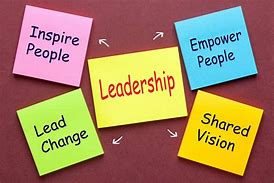
Successful Leaders who listen, engage and lead by example tend to produce at higher rates. They forge relationships with their members with boundaries. They ensure to foster a culture of creativity and innovation which occurs when your team is encouraged to explore, discover, think, and feel supported. My mother Cheryl used to say that “Encouragement sweetens labor”. I found that to be so true. Speaking down to someone will never get you want. A person who is told that they are believed in is mostly likely to push themselves and find joy in their work. When they find joy, moral is high and becomes the driving force to get things done. Don’t get me wrong you will always encounter staff that’s difficult and challenging but for the most part. Those who are goal oriented, believe in the vision and desire to please you will do their part. Their teams get motivated, establish trust and respect, enjoy their jobs, take their roles seriously. Some characteristics of an exceptional leader are:

  1. Firm with a good balance of humor and are relatable.
  2. Motivates, people leave their presence feeling confident.
  3. Does not mind others growing and succeeding past them.
  4. Promotes
  5. Views feedback as caring.
  6. Believes that unity is birthed in diversity and inclusion.
  7. Believes in a shared vision.
  8. Wisdom based decision maker.
  9. Fairness is not compromised.
  10. Exercise emotional intelligence and mindfulness.
  11. Trust who they train.
  12. Consistency is evident.
  13. Majors in conflict resolution.
  14. Enthusiasm begins with you.
  15. Integrity is always the standard.
  16. Recognizes other leaders and aim to develop them.
  17. Leads by example.

Stay tuned for Part 2 and more information about leadership and some behaviors to avoid.